
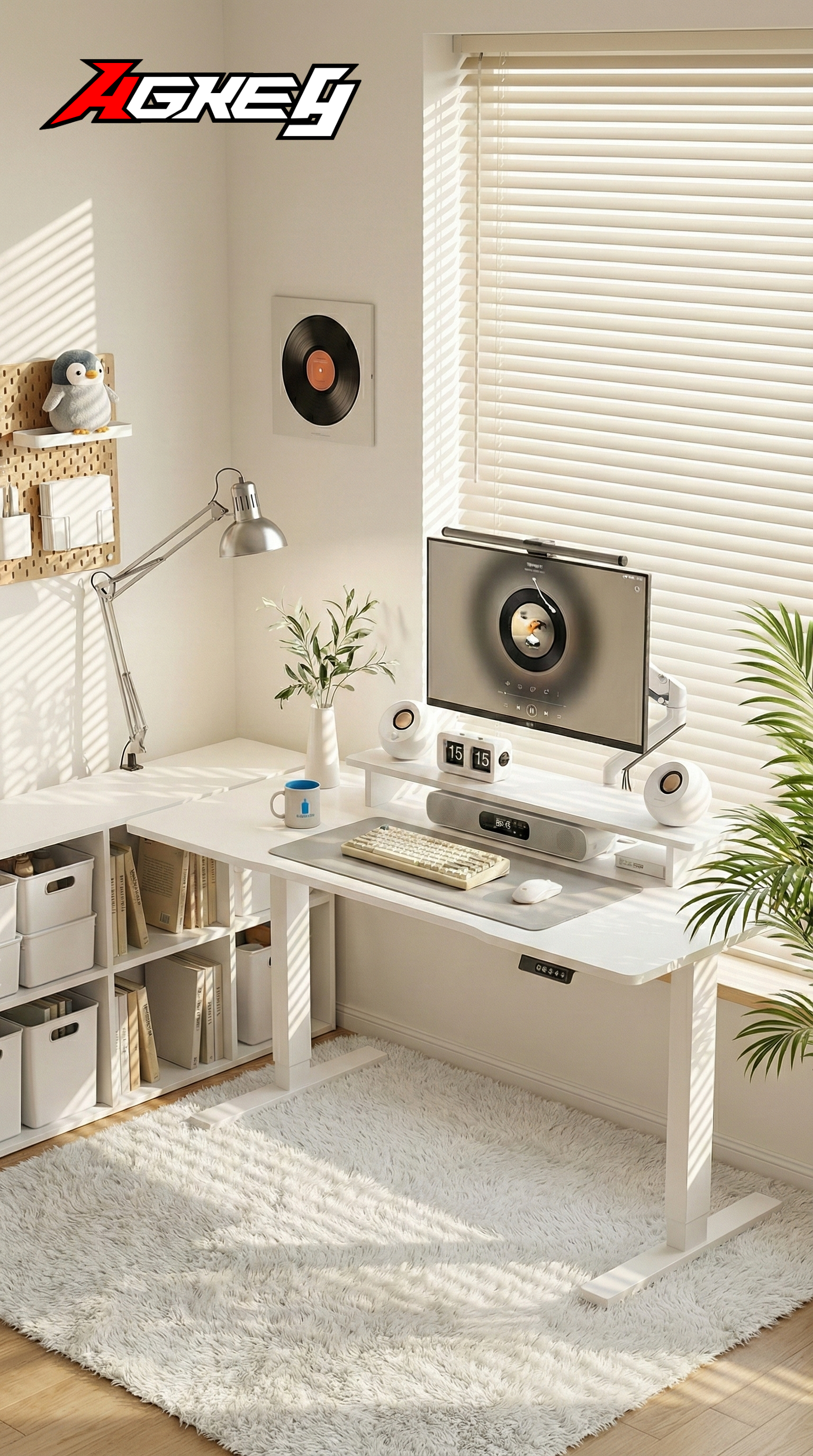
Most gaming desk photos focus on the surface — monitors aligned, keyboard centered, cables invisible. What rarely gets shown is the underside.
Yet in many Australian homes, especially apartments and shared spaces, what happens under the desk affects long-term comfort more than what’s visible on top.
Where Clutter Actually Builds Up
After a few months of real use, the underside of a desk often becomes the true cable storage zone. Power boards sit on the floor, adapters dangle mid-air, excess cables loop behind legs.
This doesn’t just affect appearance. It affects:
- Air circulation around devices
- Ease of cleaning (especially in carpeted rooms)
- Dust accumulation around power boards
- Accidental unplugging during vacuuming
For standing desks, unmanaged cables also need extra slack — which often results in loose hanging loops when the desk is raised.
Why Under-Desk Structure Matters
A shallow mesh net may hold a few cables temporarily, but it doesn’t create a controlled routing path. When power boards rest directly on the floor, they collect dust quickly — something many Australians notice during summer when airflow and cooling become more important.
Desks that include a dedicated enclosed cable box create separation between power distribution and open floor space. This keeps wiring elevated, organized, and less exposed to dust or foot traffic.
Standing Desks and Cable Movement
With adjustable desks, every lift changes cable tension slightly. If routing isn’t centralized, cords may brush against walls or legs. Over time, that friction can loosen connections.
A structured cable enclosure under the desk reduces that movement. Instead of multiple loose loops adjusting independently, cables move together in a controlled path.
How Different Desk Types Approach It
The AGKey K1 and K2 standing desks both integrate an under-desk cable management box rather than relying solely on open trays. This design allows Australian users to secure their power board above floor level and manage lift movement more predictably.
The AGKey S3 fixed desk benefits from the same structured approach, even without height adjustment — keeping cables elevated simplifies cleaning and long-term maintenance.
A Canberra Share House Experience
A Canberra university student living in a share house mentioned that his previous desk left the power board directly on the carpet. Every time someone vacuumed, cables shifted or unplugged.
After switching to a desk with an enclosed cable management space underneath, the difference wasn’t visual — it was practical. Cleaning became easier, and accidental disconnections stopped.
Clean Isn’t Just a Surface Detail
In many Australian homes, desks are multi-purpose work zones. Airflow, hygiene, and ease of maintenance matter just as much as aesthetics.
When choosing a gaming or standing desk, it’s worth looking underneath — because that’s where the long-term comfort often lives.
Share:
Why Some “Integrated Power” Desks Don’t Work Well in Australia
The Real Cost of a Gaming Desk in Australia: What Buyers Worry About Before Checkout