
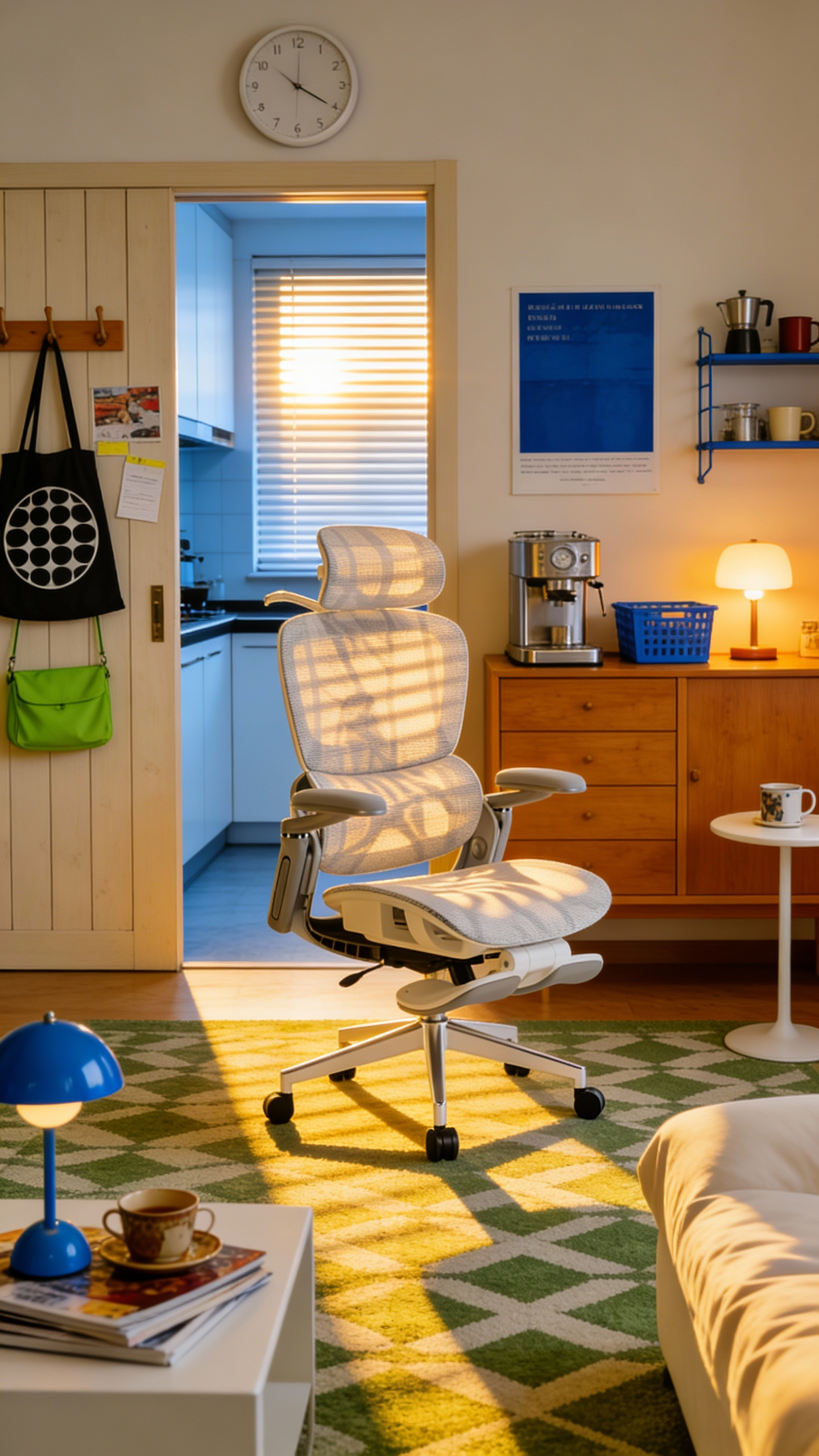
The “Living-Room Friendly” Chair: Support That Matches Your Space
Pain point: In a lot of overseas rentals, the chair isn’t just for work—it’s a permanent roommate in the living room or a visible fixture in the bedroom. That changes what “good” means. A chair can be supportive, but if it looks like a piece of dramatic gaming hardware—sharp wings, loud accents, shiny plastic—it can make the whole corner feel temporary and chaotic. When your desk shares space with a sofa, a bed, or a dining table, you don’t want a chair that visually shouts louder than everything else in the room.
The bigger problem is what happens after purchase. If the chair looks out of place, people start managing it instead of using it. It gets angled away from the main sightline, parked behind the desk, or rolled into the corner whenever someone visits. In share houses, you might even feel pressure to keep the common area looking neutral, which means the chair becomes something you “hide” rather than something you sit in daily. That’s how ergonomic value disappears: the chair is technically supportive, but it never earns a natural place in your routine because it doesn’t belong visually.
Solution: Choose a chair that reads as furniture first, then verify it performs as ergonomic support. Start with the visual materials. Fabric-like textures, fine mesh in neutral tones, and matte finishes tend to blend into real homes. High-gloss shells and contrast “sports stitching” push a chair into the equipment category. If your space has warm lighting or timber furniture, warmer neutrals often look calmer than pure black with shiny parts. If your room is modern and minimal, a muted charcoal or soft grey typically disappears better than a bright, high-contrast design.
Then look at proportion and “visual height.” In a living room corner, the chair’s top line matters because it sits in the same sightline as shelves, windows, and wall art. A chair with an overly tall or bulky headrest can dominate the corner, even if the footprint is similar. If you don’t truly need a headrest, consider a chair with a cleaner back profile or a headrest that is removable or understated. Also pay attention to armrest shape: wide, flared armrests make the chair look larger and can visually crowd a small space. A tighter, more compact arm profile helps the chair look intentional rather than oversized.
Now confirm the functional basics so you don’t sacrifice comfort for looks. A “furniture-friendly” chair should still let you sit correctly: adjustable seat height so feet can rest flat, lumbar support that meets your lower back (not just a decorative curve), and a recline that supports short posture changes without requiring a big dramatic lean. In small rooms, you’ll also appreciate a chair that tucks in: armrests that lower enough to slide under a desk, and a seat that can park close without forcing the chair to stick out into the walkway.
Finally, treat photos like a reality check. Product images that only show RGB lighting and racing setups might signal that the chair is designed to be seen as gear. Look for brands that show the chair in a calm home environment—next to a sofa, a simple desk, or a bed-side workspace. If it looks natural there, it’s more likely to feel natural in your space, too.
Sienna, an international student in Sydney, lived in a share house where the living room doubled as everyone’s study area. She wanted back support but didn’t want a chair that made the space look like a gaming showroom. She picked a muted-tone ergonomic chair with matte finishes and a low-profile back. It blended next to the couch, stayed parked neatly at the desk, and still felt comfortable for long reading sessions and weekend gaming.
Product connection: The best ergonomic chair for a living room or bedroom corner is one that doesn’t force you to choose between design and support. When the chair uses calm colors, restrained materials, and compact proportions—while still offering the core adjustments—you’re more likely to use it every day. And the chair you use daily is the one that actually improves posture. In real homes, the most ergonomic choice is often the one that looks like it belongs.
Share:
BUY IT ONCE OR PAY FOR IT TWICE
THE DESK THAT SURVIVES REAL LIFE BUDGETS