
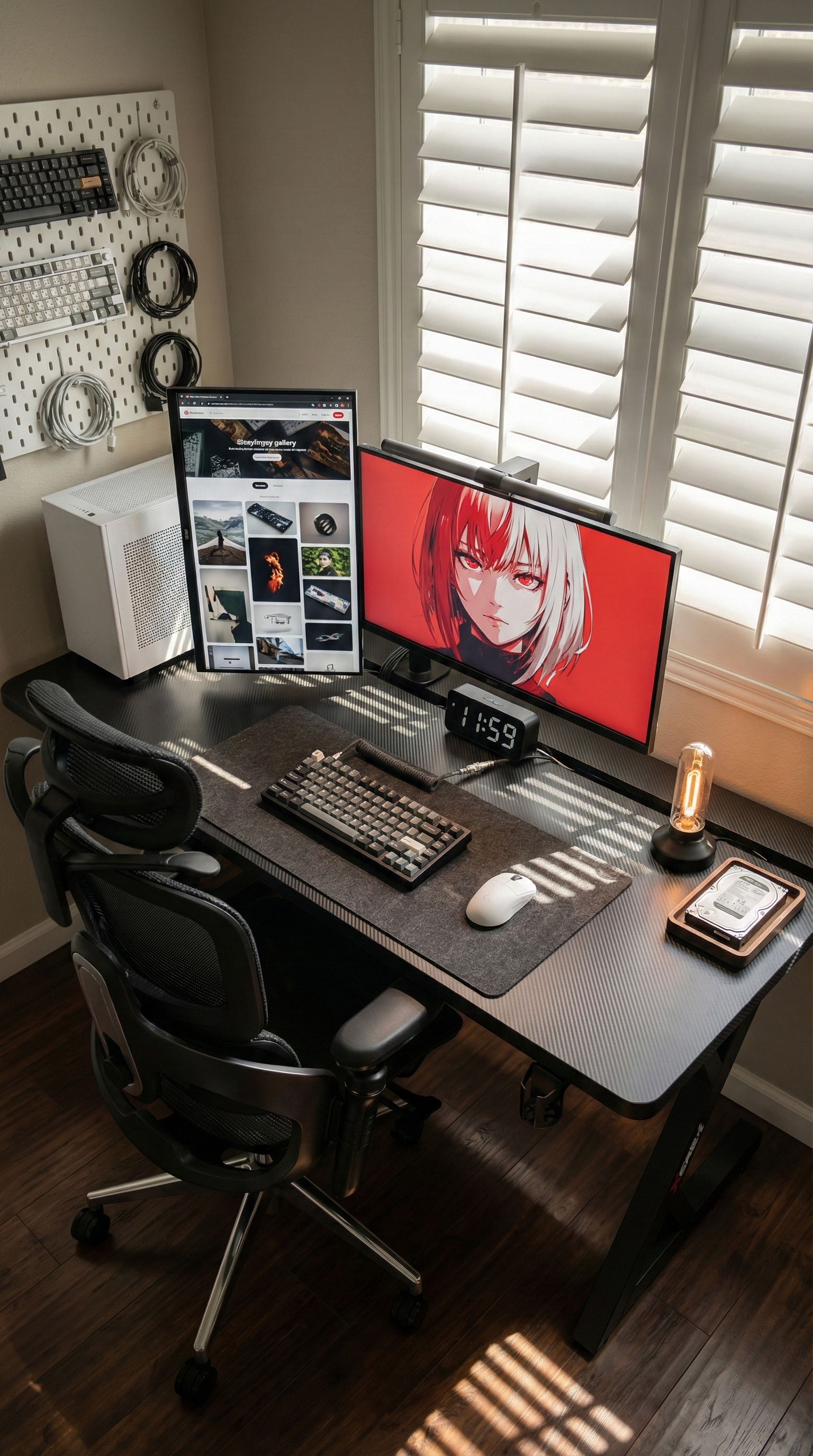
When Australians search for a gaming desk, they often start with looks. A carbon-fibre finish, RGB lighting, or a sharp frame can catch the eye quickly. But the real problem usually shows up later, after the desk is assembled, the monitors are mounted, and the first long session begins.
The issue is stability.
A gaming desk can look great in product photos and still feel disappointing in daily use if the screen shakes every time you type, the surface flexes when you flick the mouse, or the frame feels unsettled once you add real gear. For many buyers, that is the moment they realise they did not need a more “gamer-looking” desk. They needed a more solid one.
Why stability matters more than most features
A modern gaming setup is heavier and more demanding than it used to be. One large monitor is common. Two monitors are normal. Add a monitor arm, keyboard, mouse pad, desktop speakers, a controller dock, and sometimes even a work laptop, and the desk is doing far more than holding a screen and a keyboard.
That is why wobble becomes such a common frustration. It affects more than comfort. It changes how the whole setup feels. If the desk moves every time you react in-game, adjust your arms, or lean in during a late-night ranked match, the space stops feeling reliable.
For Australian buyers, this matters even more because many setups need to do double duty. The same desk may need to handle work during the day and gaming at night, without forcing you to compromise on either.
The problem is not only weight, but real-world movement
Many shoppers focus only on whether a desk can technically hold their equipment. That matters, but it is not the full story. A desk can support the load on paper and still feel unstable in practice.
What actually matters is how the desk behaves when you use it normally:
- Does the monitor shake when you type fast?
- Does the frame stay steady when you move the mouse aggressively?
- Does the desktop still feel planted with a monitor arm attached?
- Does the desk remain composed when you raise it to standing height?
Those are the questions that shape everyday satisfaction.
A realistic setup Australians know well
Picture someone working from a small apartment in Brisbane. During the day, the desk holds a laptop, a second monitor, and a notebook for calls. At night, the laptop slides aside, the headset comes on, Discord opens, and the same desk becomes the centre of a few hours of gaming. If the surface is shallow, the keyboard ends up too close to the edge. If the frame is weak, the monitor shudders every time the player makes a quick flick. And if cable management is poor, the whole setup starts to feel cluttered and cramped fast.
That kind of mixed-use setup is exactly why stability has become the most important buying concern. It is not just about performance. It is about whether the desk feels calm and dependable across everything you do on it.
What to look for if stability is your priority
If this is the pain point you are trying to solve, a better gaming desk should offer more than styling cues. Look for a desk with:
- A reinforced steel frame rather than a lightweight frame that flexes under movement
- Enough desktop depth to keep monitors, keyboard, and accessories from feeling crowded
- Strong support for multi-monitor setups and monitor arms
- Cable management that keeps power boards and loose wires from turning the desk into visual clutter
- Reliable performance at both sitting and standing height if you want adjustability
These details make a bigger difference than decorative add-ons because they affect the feel of the desk every single day.
A natural fit: AGKey K2 Black
If your main concern is getting a gaming desk that feels solid under a serious setup, the AGKey K2 Black is the most relevant option in the range.
It makes sense for this pain point because it is built specifically for heavier workstations and multi-monitor use. The dual-motor system is designed for smoother lifting, the reinforced frame is aimed at better stability at standing height, and the 75cm desktop depth gives you more usable room than the shallow desks that often leave setups feeling cramped. It also includes cable management design, which matters when your desk is handling both work gear and gaming gear in the same footprint.
In other words, the K2 Black is a strong match for buyers who are not simply shopping for a desk that looks like a gaming desk. They are shopping for one that still feels steady once the setup is fully built and actually being used.
The best gaming desk is the one that disappears beneath the setup
A good gaming desk should not keep reminding you that it is there. You should not notice wobble when you type. You should not feel the frame shift during a match. You should not have to work around a surface that feels too small the moment real equipment lands on it.
That is why stability is the strongest pain point in the market right now. Australian buyers are not only looking for style. They want a desk that feels trustworthy under pressure, comfortable across long sessions, and capable of handling both work and play without compromise.
Once you solve that, everything else in the setup starts to work better.
Share:
How to Choose an Ergonomic Chair for Long Sitting Hours in Australia