
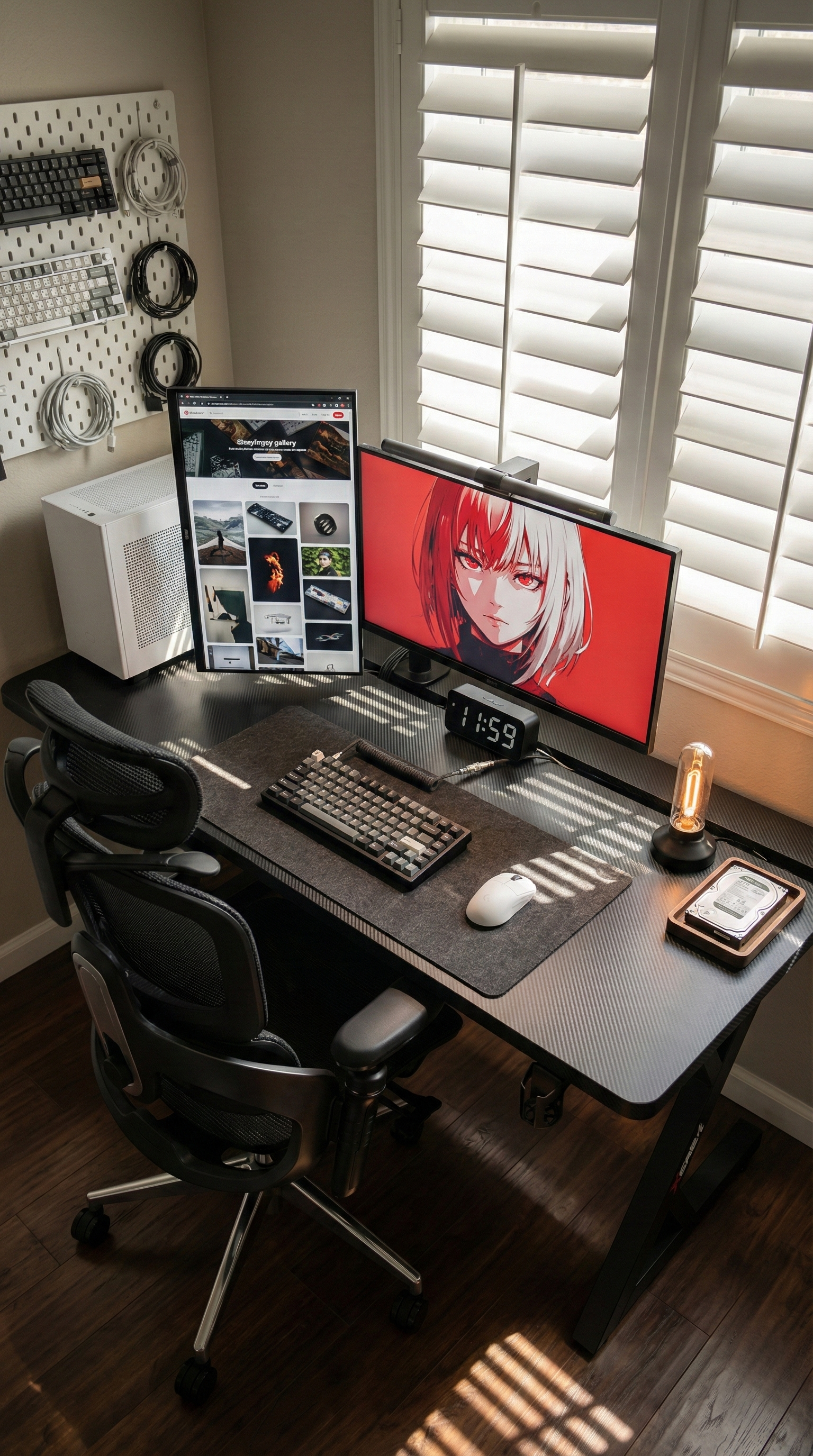
Monitor arms are everywhere now in Australia. Dual screens, vertical setups, ultrawides — most serious gaming or WFH desks include at least one clamp-mounted arm. But very few buyers stop to think about what that clamp is actually doing to the desk itself.
The question isn’t just whether the desk can hold the weight. It’s whether the rear edge — where the clamp tightens — is designed to handle concentrated pressure over time.
Weight Isn’t the Only Factor
When you mount a monitor arm, you’re not simply placing 8–12kg on the desk. You’re creating leverage. The arm extends forward, which multiplies force at the clamping point. Add a second monitor, and the twisting pressure increases further.
On some desks, especially thinner tops or lighter frames, this leads to subtle bending at the rear edge. At standing height, that flex becomes more noticeable. Over time, users report small vibrations or instability that wasn’t obvious during the first week of use.
That’s why Australian buyers frequently search phrases like “monitor arm compatible desk” or “standing desk stable with dual monitors.”
What Makes a Desk Arm-Friendly
- A reinforced rear edge that resists compression
- Clear guidance on clamp thickness compatibility
- Frame design that minimizes torsion under uneven load
- Sufficient dynamic lift rating for multi-monitor setups
Dual-motor lift systems tend to maintain better balance when weight distribution isn’t perfectly centered. For users running two monitors on a single arm bar, or separate arms mounted near the back corners, that balance matters.
Where K1, K2 and S3 Fit
The AGKey K1 single-motor standing desk is suitable for lighter configurations — for example, a single monitor arm or a dual-monitor setup without heavy additional equipment. Its 72–116cm height range and 100KG capacity cover many standard home office loads.
For heavier setups, the AGKey K2 dual-motor system provides higher stability under dynamic lift conditions, supporting up to 150KG dynamic and 200KG static load. This makes it better aligned with dual-arm or multi-screen workstations where torsional resistance becomes important.
If you’re using fixed-height positioning and mounting multiple arms or heavier displays, the AGKey S3 fixed desk removes lift-related variables entirely, offering a structurally rigid solution designed for higher static stability.
A Sydney Setup That Learned the Hard Way
A Sydney-based content creator recently described how his previous desk handled weight fine — until he upgraded to a wider ultrawide monitor mounted on an arm. Within weeks, he noticed the rear edge compress slightly where the clamp tightened.
The desk wasn’t collapsing. It just didn’t feel confidence-inspiring anymore. When he eventually switched to a system with clearer clamp compatibility guidance and higher structural rigidity, the difference wasn’t dramatic visually — but it felt secure again.
Small Details, Long-Term Comfort
In Australia’s growing WFH + gaming hybrid culture, monitor arms aren’t accessories anymore. They’re standard equipment. Choosing a desk that anticipates that reality — instead of treating it as an afterthought — prevents frustration later.
Before tightening that clamp, it’s worth asking: is the desk built for this, or just tolerating it?
Share:
It’s Not Just the Chair — It’s What Happens If Something Goes Wrong
The Cable Management Myth: Why “Built-In” Doesn’t Always Mean Practical