
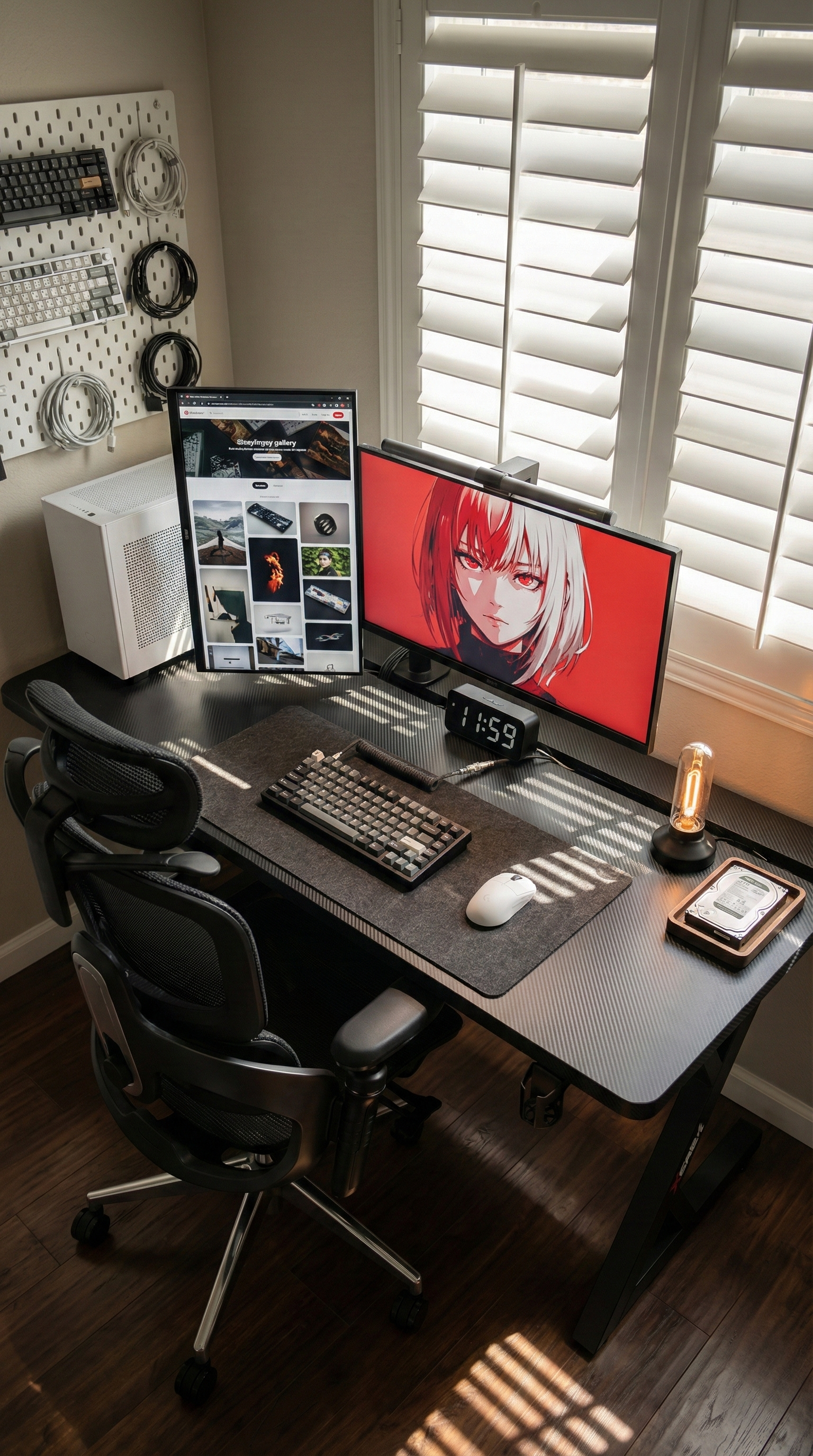
For many Australian buyers, the biggest reason to upgrade to an ergonomic chair is simple: their lower back starts to fade long before the workday or gaming session is over.
That is the real pain point behind a lot of ergonomic chair shopping. It is not just about wanting a chair that looks more premium. It is about wanting to get through long hours at a desk without that familiar pattern of stiffness, slumping, and constant repositioning.
If you work from home, study online, game at night, or do all three from the same setup, the right chair needs to do more than feel good for ten minutes. It needs to support your body properly across the full session.
Why lower-back fatigue is such a common problem
Lower-back discomfort usually builds gradually. A chair may seem acceptable at first, but after a few hours the weak points show up. The lumbar area is unsupported, the seat depth is wrong for your legs, the armrests sit too high or too low, and you end up leaning forward instead of sitting back into the chair.
That matters because long sessions are rarely truly static. People shift between typing, video calls, focused work, browsing, controller use, and short breaks. A chair that only feels right in one posture often becomes tiring in real life.
For Australian buyers, this is especially relevant in home offices and hybrid setups where one chair often has to do everything. It needs to support work, study, and downtime in the same footprint, without becoming hot, awkward, or overly bulky.
What to look for if back support is your main priority
If lower-back fatigue is the issue you are trying to solve, these features matter more than flashy styling:
- Adjustable lumbar support: so the chair can meet your lower back properly instead of leaving a gap.
- Seat depth adjustment: so your back can stay in contact with the backrest while your legs still sit comfortably.
- Armrest adjustment: to reduce shoulder and upper-back tension that often feeds into poor posture.
- Breathable materials: especially helpful in warmer Australian conditions and during longer sessions.
- Recline support: because a chair should let you change posture through the day, not lock you into one rigid position.
A good ergonomic chair does not force you to “sit perfectly” all day. It makes it easier to stay supported while you naturally move between tasks.
A realistic setup Australians will recognise
Picture someone in a Brisbane apartment using the same desk for weekday admin work and evening gaming. By 3 pm, they are already inching forward in the seat. By 8 pm, their lower back feels tight, their shoulders are creeping up, and they are shifting every few minutes trying to get comfortable again.
That kind of setup is common. The problem is not always the number of hours alone. It is that the chair never really adapts to the person, so the body keeps compensating.
Why the Sylph Ergonomic Chair is a strong fit for this pain point
If your main goal is reducing lower-back fatigue during long desk sessions, the Sylph Ergonomic Chair is a natural fit.
Its design is well matched to the exact problem many buyers are trying to solve. The chair includes adjustable lumbar support, seat depth adjustment, a breathable mesh build, a 3D adjustable headrest, and 6D adjustable armrests. That combination gives you more ways to tune the chair to your body instead of trying to adapt your body to the chair.
That is especially useful if your day changes shape. You might sit upright for focused work in the morning, lean back during calls in the afternoon, and spend part of the evening gaming or watching content. A chair with broader adjustment range is more likely to stay comfortable across those shifts.
The Sylph also has a clean black mesh finish that suits both professional home-office setups and darker gaming spaces, so it does not feel out of place if your room has to serve multiple purposes.
How to tell if you actually need a better ergonomic chair
You may be ready for an upgrade if any of these sound familiar:
- Your lower back feels tired after a few hours even when the day is not especially demanding.
- You keep leaning forward because the backrest never feels quite right.
- You struggle to keep your feet flat and your back supported at the same time.
- You get hot and uncomfortable in long sessions.
- You use one setup for work and gaming, but your current chair only feels acceptable for short bursts.
Final thought
The best ergonomic chair for most Australian buyers is not the one with the longest feature list on paper. It is the one that directly solves the problem you feel every day.
For many people, that problem is lower-back fatigue from long sitting. If that is what keeps pushing you out of focus, an adjustable chair with proper lumbar support and a breathable design is usually the smartest place to start. And if you want a chair built specifically for long desk use across work, study, and gaming, the Sylph Ergonomic Chair is one of the more relevant options to look at.
Share:
The Real Gaming Desk Problem in Australia: How to Build a Setup That Fits Your Room and Still Feels Good to Use
How to Choose an Ergonomic Chair for Long Hours Without Ending the Day With an Aching Back