
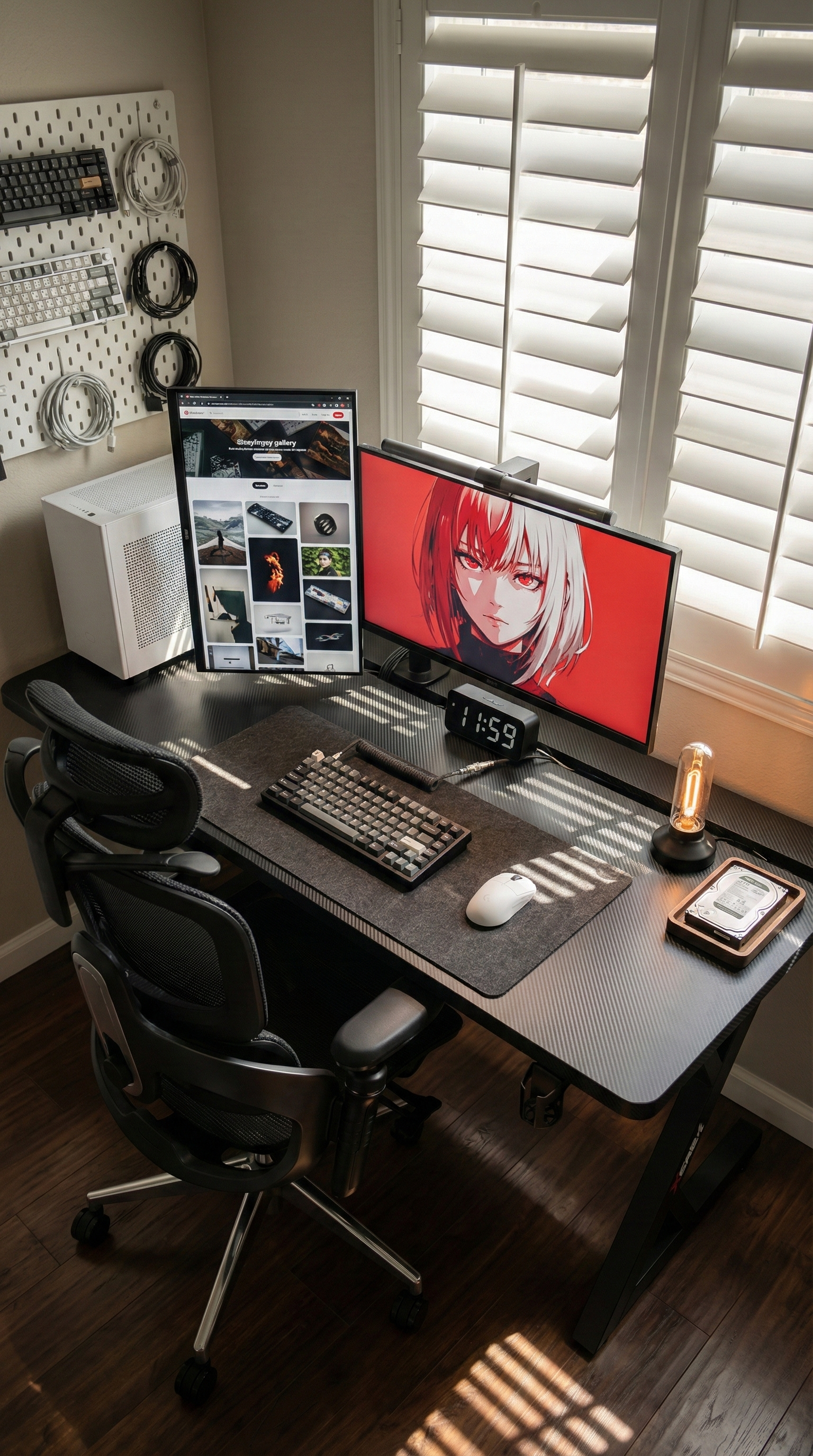
For many Australian buyers, the real reason to shop for an ergonomic chair is not style. It is the moment when a full workday turns into an evening gaming session and your lower back, shoulders, and neck start complaining before the night is over.
That is the strongest chair-related pain point in this category: long sitting hours in a chair that cannot properly adjust to your body, desk height, and screen position. When the chair is wrong, even a tidy setup can feel tiring. When the chair fits well, long sessions become much easier to manage.
Why this matters so much for Australian home offices
Across Australia, hybrid work has made the home setup more important than ever. Many people are no longer using a desk chair for one short task a day. The same chair now has to handle work calls, study, admin, browsing, and gaming in one place.
That is where cheap or poorly fitted chairs usually fall short. They may look acceptable at first, but once you spend hours sitting in them, the common problems start to show:
- lower-back discomfort from weak or poorly placed lumbar support
- neck and shoulder tension when the chair does not support upright posture well
- arm fatigue when the armrests do not line up with the desk
- heat and discomfort during longer sessions, especially in warmer rooms
- a “one-size-fits-all” feel that does not suit different heights and working styles
Australian workstation guidance also puts a strong emphasis on adjustability, posture variation, and reducing long unbroken periods of sitting. In other words, the chair should help you fit the setup properly, not force your body to adapt to the chair.
The real buying question is not “Is this chair ergonomic?”
A better question is: can this chair be adjusted closely enough to support the way you actually sit for long hours?
That matters because two buyers can use the same desk and monitor, but have completely different experiences depending on chair fit. A chair might feel fine for 20 minutes in a showroom or product photo, then feel frustrating after three hours at home.
If you are shopping seriously, look beyond the word “ergonomic” and focus on whether the chair gives you enough control over the parts that affect comfort most:
1. Lumbar support that meets your lower back properly
If the lumbar support sits too high, too low, or feels too fixed, your lower back often pays for it later. A chair with adjustable lumbar support gives you a better chance of setting the backrest to your body instead of settling for a generic shape.
2. Armrests that work with your desk height
If your shoulders are constantly raised or your elbows sit awkwardly, tension builds fast. Adjustable armrests help bring the chair into line with your desk and keyboard position.
3. Breathability for longer sessions
Long sitting hours feel worse when the chair traps heat. Breathable materials can make a noticeable difference, especially if your chair needs to carry you through both work and after-hours use.
4. Head and upper-body support for mixed-use setups
Not everyone sits the same way all day. Some people move between focused upright work, casual browsing, and gaming or media use. A chair that supports those changes tends to feel more livable over time.
A realistic scenario: one chair, two parts of the day
Picture someone in a Brisbane apartment working from home at a desk by day, then jumping back on at night for a few matches with friends. The room is not huge, so there is no separate office and gaming zone. The chair has to do both jobs.
In that kind of setup, the biggest problem is usually not the desk. It is that the chair starts out “good enough” for email and short tasks, then feels unsupportive by late afternoon. By the time the evening session starts, the user is shifting around, leaning forward, and trying to get comfortable again.
That is exactly why adjustability matters more than marketing language. A chair that can be tuned for upright work, arm support, lower-back comfort, and better airflow is far more likely to stay useful across the whole day.
When the Sylph Ergonomic Chair makes sense
If your main problem is discomfort during long desk hours, the Sylph Ergonomic Chair Black is a strong fit because its feature set lines up well with that exact pain point.
Rather than relying on a fixed shape, it offers several adjustments that matter in real use, including adjustable lumbar support, a 3D adjustable headrest, 6D adjustable armrests, seat depth adjustment, and a breathable mesh build. For buyers trying to improve comfort across long work and gaming sessions, those are the features that make the recommendation feel earned rather than decorative.
The mesh design is also a sensible match for people who want a chair that feels lighter and less stuffy over time, while the recline function gives a bit more flexibility during breaks between focused tasks.
It will not solve every workstation issue by itself, because monitor height, desk position, and movement breaks still matter. But if the main issue is that your current chair does not adapt well enough to your body or routine, the Sylph fits the brief naturally.
What to check before you buy any ergonomic chair
- Can you adjust the lumbar support in a meaningful way?
- Can the armrests align with your desk and keyboard height?
- Does the seat and back design look suitable for long sessions, not just short use?
- Will the chair suit a work-and-play setup rather than a single-purpose office space?
- Does the material choice make sense for airflow and everyday comfort?
Final thoughts
The biggest ergonomic chair problem for Australian buyers is usually simple: too many hours in a chair that does not adjust well enough to prevent lower-back and neck discomfort. That is why the best buying decisions are often less about appearance and more about fit, support, and flexibility over a full day.
If that sounds familiar, the Sylph Ergonomic Chair Black is worth a serious look. It matches the needs of buyers who want better support for long sitting hours, especially in hybrid home setups where one chair has to handle both productivity and downtime.
Share:
Why So Many Australian Gamers Regret Buying a Wobbly Desk
Why Desk Stability Is the Real Deciding Factor in a Gaming Desk