
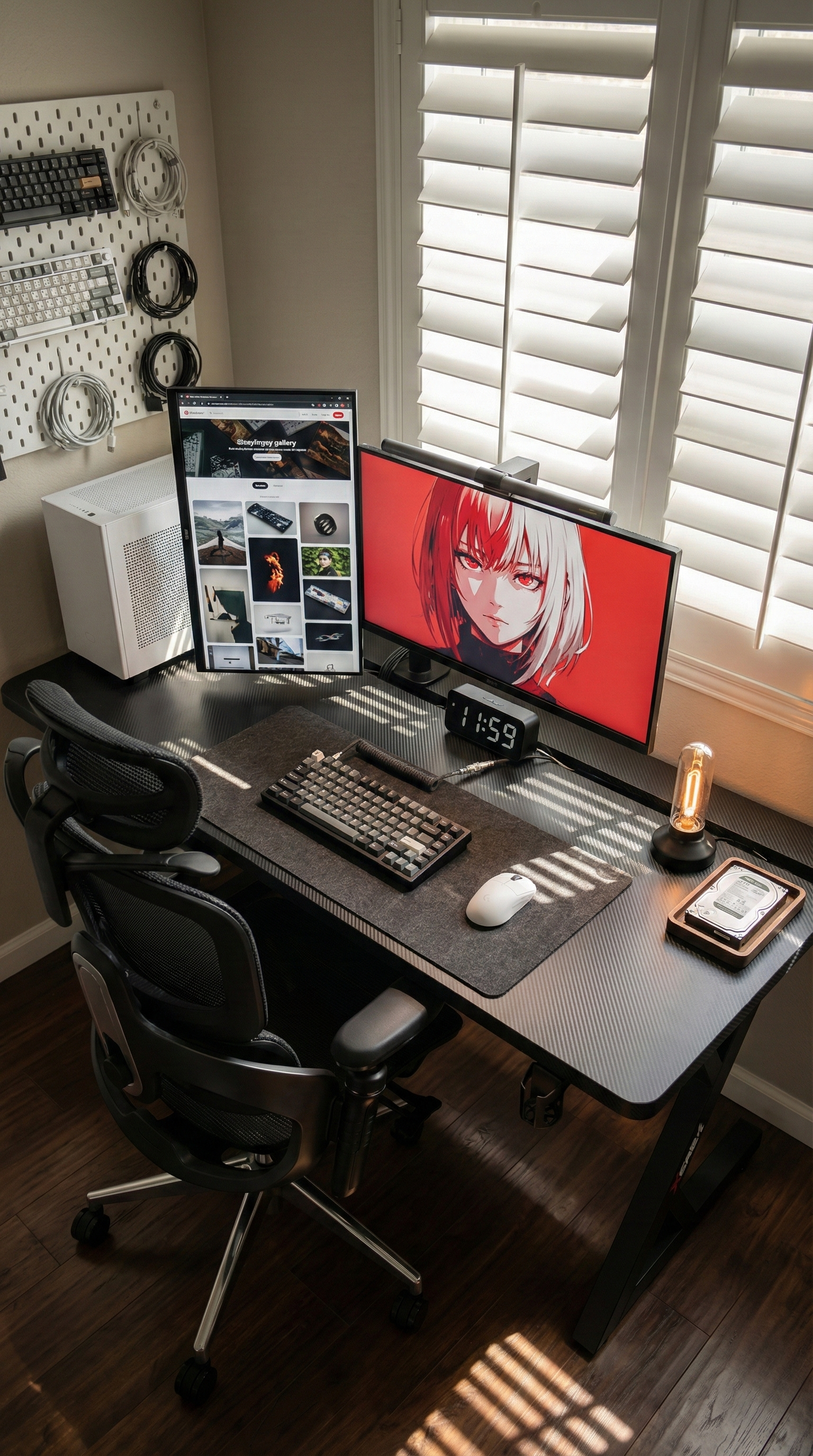
If you search for a gaming desk in Australia, the first wave of options can look surprisingly similar. Carbon-look tops, RGB strips, cup holders, headset hooks. On paper, they all seem built for gaming.
But the real problem usually shows up after the desk is assembled and the setup is fully loaded. Add a monitor arm, a second screen, a full-size keyboard, a heavy PC, and a few sharp mouse movements, and suddenly the desk starts to feel less like a foundation and more like a compromise.
For many Australian buyers, that is the pain point that matters most: desk wobble under real gaming gear.
Why desk wobble matters more than most buyers expect
A gaming desk does not just hold your gear. It affects how your whole setup feels to use. If the frame flexes when you lean in, or the desktop shakes every time you type, the problem spreads through the rest of the battlestation.
- Your monitor can visibly shake on a monitor arm.
- Your mouse movement can feel less controlled in fast games.
- Your setup feels cluttered and less premium, even when the parts are good.
- Work-and-play use becomes more tiring because the desk never feels fully settled.
This is especially relevant in Australia, where plenty of people are building setups in apartments, rentals, and spare bedrooms. Space is often limited, which means the desk has to do more. It needs to support gaming, work, storage, and cable routing without turning unstable the moment the setup gets serious.
The issue is not always the monitor arm
A lot of shoppers assume the monitor arm is the problem. Sometimes it is. But often, the deeper issue is that the desk underneath was never rigid enough for the load and movement of a real setup.
A light frame might feel acceptable on day one with a single screen. Then you add a second monitor, mount both screens, tuck the power board underneath, and start using the desk for both weekday work and late-night gaming. That is when hidden weaknesses start to show.
A realistic setup Australians will recognise
Picture someone in a Melbourne apartment using one corner of the living room as both home office and gaming zone. During the day, there is a work laptop docked beside a 27-inch monitor. At night, the laptop slides aside, the keyboard comes forward, Discord opens on the second screen, and the desk has to handle a few hours of ranked play.
On a weak desk, every lean, keystroke, or quick mouse flick sends a small vibration through the frame. The monitor trembles just enough to notice. Nothing has technically “broken,” but the whole setup feels off. That is the kind of frustration shoppers are really trying to avoid when they search for a better gaming desk.
What to look for if stability is your main concern
If wobble is the problem, the solution is usually structural rather than decorative. Focus on the parts of the desk that actually determine how stable it feels in daily use:
- A reinforced steel frame rather than a thin, lightweight base.
- A desktop that can handle heavier gear without feeling flimsy.
- Enough width and depth for monitors, keyboard movement, and everyday workspace needs.
- Cable management that keeps cords and power boards controlled instead of dragging around the frame.
In other words, the best gaming desk is often the one that feels uneventful. No shake, no sag, no constant adjustment, no little annoyances every time you sit down.
Why the AGKey S3 Black is the most natural fit for this pain point
If the main goal is to reduce wobble and create a steadier base for a heavier gaming setup, the AGKey S3 Black is the strongest match from the current catalogue.
It is positioned as a heavy-duty desk, with a reinforced Z-frame, triple-crossbar support, and cable-management components that suit more demanding setups. That makes it a sensible recommendation for buyers using dual or triple monitors, monitor arms, a full tower PC, or a desk that needs to pull double duty for work and gaming.
Just as importantly, it answers the real reason many people upgrade in the first place. Not because they want their desk to look more “gamer,” but because they want the whole setup to stop moving every time they use it properly.
Final thought
For Australian shoppers searching for a gaming desk right now, the biggest mistake is treating the desk like a background item. Once your setup includes multiple screens, mounted gear, and long hours at the keyboard, stability becomes the feature that shapes everything else.
A desk that stays solid under pressure is not a luxury detail. It is the base that makes the rest of your setup feel right.
Share:
How to Choose an Ergonomic Chair for Long Sitting in Australia
How to Choose an Ergonomic Chair for Long Hours Without Finishing the Day With an Aching Back