
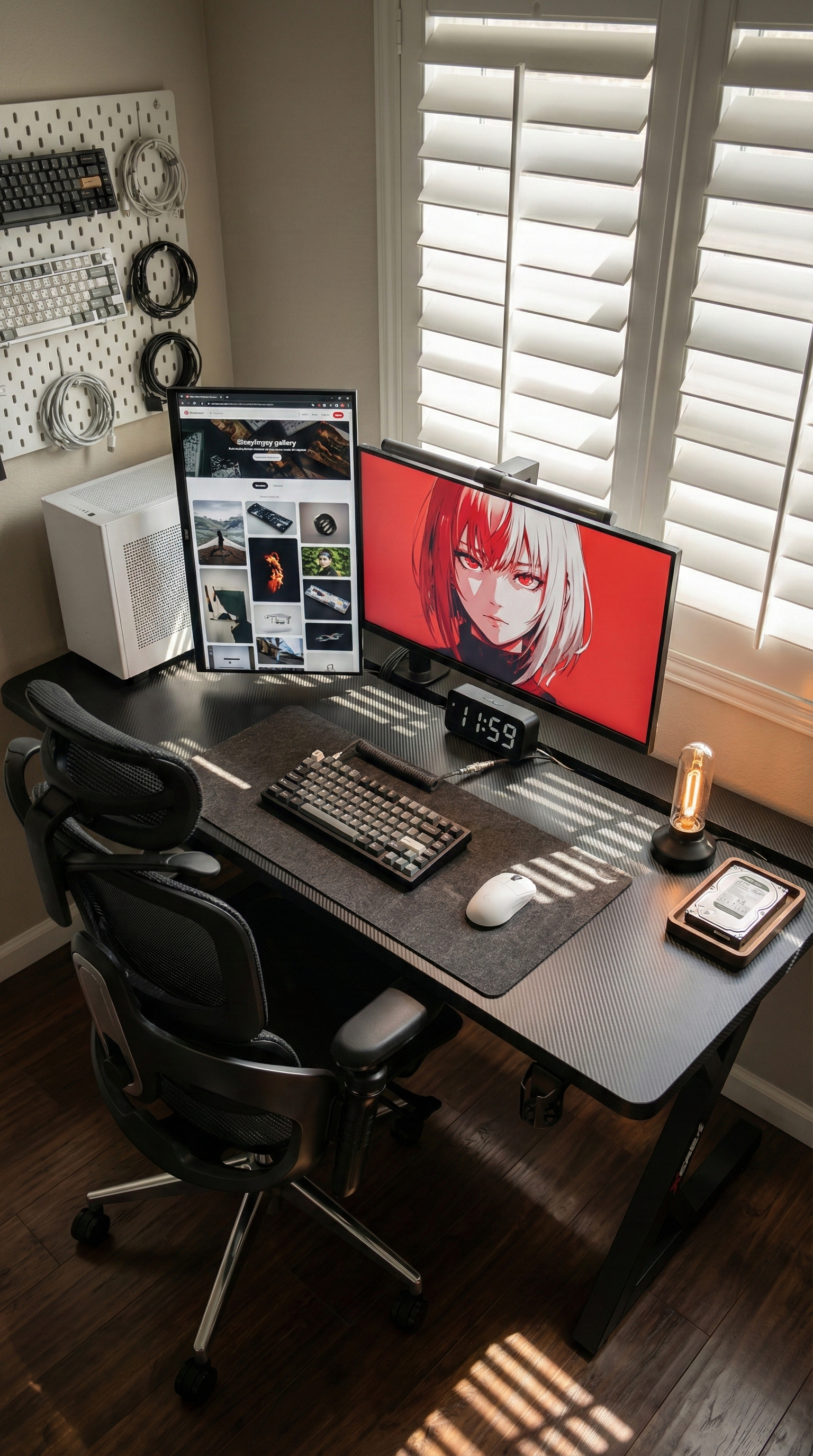
When Australians shop for a gaming desk, the first temptation is often to focus on the aesthetic: black finish, carbon-look top, LED accents, maybe a cup holder or headphone hook. But once the setup is built, the real test is much simpler. Does the desk stay solid when you actually use it?
That question has become one of the biggest buying concerns for gaming desk shoppers because modern setups are heavier and more demanding than they used to be. A desk now needs to handle monitors, monitor arms, speakers, a PC, cables, and the everyday reality of switching between work and gaming without feeling shaky or overcrowded.
The Pain Point: A Desk That Looks Good but Wobbles Under Pressure
A gaming desk can look impressive in product photos and still become frustrating the moment real gear goes on top of it. The common problem is instability: screen wobble when typing, movement through the frame during fast mouse flicks, or a surface that feels less reassuring once a monitor arm or dual-screen setup is clamped on.
For Australian buyers, this matters even more because many people are not shopping for a dedicated gaming room. They are fitting a battlestation into an apartment, spare bedroom, or mixed-use home office. That means the desk has to do more than one job, and it has to do it without becoming the weak point of the setup.
Why This Matters More Than Ever
Gaming desks are no longer just for a keyboard and one small display. Many buyers now want:
- enough width for one or two monitors
- enough depth so the screen does not feel too close
- a frame that stays steady during long sessions
- space for both work gear and gaming accessories
- cable management that stops the setup from feeling messy
When stability is missing, everything else feels worse. Your monitor shakes when you type. Your aim feels less precise. Your desk mat, keyboard, and speakers start competing for space. Even a good-looking setup can end up feeling temporary and annoying instead of settled and comfortable.
The Real-World Scenario Most Buyers Recognise
Picture someone in a Melbourne apartment working from home during the day, then jumping into a few matches at night. They have two monitors, one on an arm, a laptop off to the side, and not much spare floor space. What they need is not a flashy “gaming” label. They need a desk that stays calm when they lean in, move quickly, or spend hours at it, while still giving them enough usable surface to avoid that cramped, cluttered feeling.
That is where many cheaper or lightly built desks disappoint. They may seem fine at first, but once the full setup goes on, the weak points show up fast.
What to Look for If Stability Is Your Priority
1. A frame that is built for weight, not just appearance
The desk should feel structurally confident, especially if you plan to use monitor arms or a heavier screen setup. Reinforced steel support matters more than decorative extras.
2. A desktop size that matches how you actually use your setup
Stability and usable space go together. If the desk is too small, you end up pushing equipment to the edges or stacking gear awkwardly, which makes the whole setup feel less controlled.
3. Cable management that keeps the surface usable
A cleaner setup is not only about looks. When cables are better contained, the desk becomes easier to use every day and less distracting during both work and gaming.
A Natural Fit: AGKey S3 Black
If your main concern is getting a gaming desk that feels solid under a real setup, the AGKey S3 Black is the most natural fit from the catalog. It is a desk-led solution for buyers who want stability first, without losing the practical features that make a setup easier to live with.
The S3 Black is designed around a solid steel frame and a spacious desktop, with size options that make more sense for modern multi-device setups. It also includes under-desk cable management, which helps keep the surface cleaner and more usable instead of turning the area under your desk into a tangle of cords. For someone building a work-and-play station, that combination makes a real difference.
In other words, it fits the actual buyer problem. It is not just trying to look like a gaming desk. It is trying to solve the frustration of a setup that feels shaky, crowded, or unfinished once everyday use begins.
Final Thoughts
If you are comparing gaming desks in Australia right now, stability is the question worth asking first. Before RGB, before accessories, before branding, ask whether the desk will stay steady with the gear you really plan to use on it.
Because when the desk feels stable, the whole setup feels better: cleaner, more comfortable, and more trustworthy day after day. That is exactly why a model like the AGKey S3 Black stands out for buyers who want a gaming desk that supports the full setup, not just the photo.
Share:
Why an Ergonomic Chair Matters More Than You Think for Long Hours at Your Desk
The Ergonomic Chair Question Most Australian Buyers Are Really Asking