
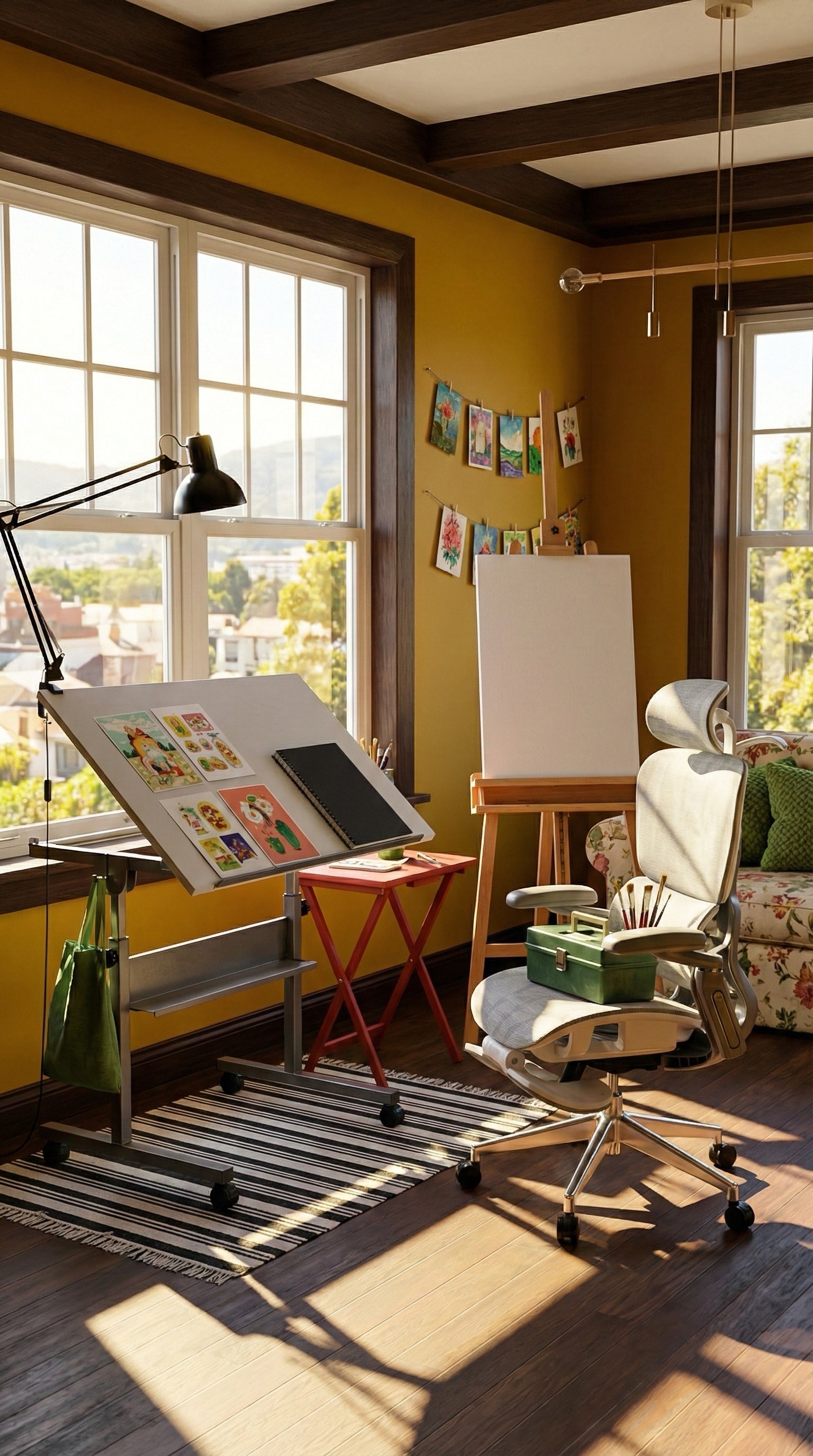
An Ergonomic Chair That Doesn’t Hijack Your Room
When the “home office” is really a corner
For many overseas renters, working from home doesn’t happen in a dedicated office. It happens beside the sofa, in a bedroom corner, or at the end of a bed. In those spaces, an ergonomic chair isn’t something you can shut behind a door—it’s part of the room’s look all day, every day. That’s why more people are moving away from chairs that scream “gaming gear.” Bright panels, aggressive angles, oversized headrests, and racing-seat styling can make a calm living space feel permanently cluttered—especially in share houses where one loud object can throw off the whole corner.
Why style-fit affects real comfort
The issue isn’t vanity. When a chair feels out of place, people start treating it like a temporary tool. They roll it away when guests come over, keep it half-tucked because it blocks a walkway, or switch back to a dining chair so the room looks “normal.” That’s how ergonomic purchases fail in real life: not because support is missing, but because the chair never becomes part of daily living. For renters who can’t repaint walls or redesign layouts, the chair has to earn its spot by blending in—not dominating.
Choose a chair that reads like furniture
Look for “furniture-friendly” design cues—the kind that sit naturally in a living room or bedroom. Start with restrained color. Low-saturation tones like soft grey, warm beige, or muted charcoal tend to age well and match most interiors. Matte or lightly textured finishes also help by reducing glare and hiding fingerprints, which makes the chair feel more like a considered piece of furniture than a piece of equipment.
Then pay attention to the silhouette. In smaller rooms, visual bulk matters as much as measurements. A supportive backrest doesn’t have to be theatrical. Avoid aggressive “racing” profiles and overly flared wings if the chair will be visible in a shared space. A cleaner outline will make the corner feel calmer, even when the chair is the biggest object in view.
Small details that make a room feel bigger
- Armrests that don’t flare out: a tighter arm profile looks lighter and makes it easier to tuck in.
- A compact footprint: reasonable base width and arm width reduce the “obstacle course” feeling.
- Neat tuck-in behavior: a chair that slides under the desk cleanly tends to look more “designed” and less intrusive.
- Understated headrest presence: optional or visually minimal headrests help keep the chair from dominating the room.
Minimal look, real ergonomics
A calm look doesn’t mean giving up adjustability. Focus on the adjustments that matter without adding visual noise: seat height for feet-flat posture, practical lumbar support that actually meets your lower back, and a controlled recline that supports small posture shifts. In tight layouts—near a bed, sofa, or wall—those “small shift” posture changes are often more useful than dramatic recline angles.
This is also where chairs like Aerlume’s ergonomic range tend to fit naturally: a more home-friendly aesthetic paired with the everyday adjustments people actually use. The goal is simple—a chair that looks appropriate in a shared living space, but still supports long sessions without making you constantly fidget or compensate.
Keep the decision low-friction when buying online
When shopping from overseas, treat clarity as a quality signal. Prioritize listings that show real dimensions and photos in normal home interiors (not only dramatic RGB rooms). If a brand can’t demonstrate how the chair looks in a calm, lived-in space, it may not be designed for one. And because style-fit is as personal as body-fit, a reasonable return or exchange policy can matter just as much as a feature list—especially when your budget doesn’t allow trial-and-error.
A living room corner that still felt “normal”
Ethan, an international student in Perth, lived in a share house where his desk sat in the living room corner. He needed proper support for long study nights, but he didn’t want a loud chair that looked like it belonged in an esports arena. He chose a neutral, low-saturation ergonomic chair with a slimmer profile and fewer flashy details. It blended beside the sofa, didn’t visually take over the space, and still felt supportive when he switched from lectures to gaming.
Comfort that fits the room, not just the body
The best ergonomic chair for a living room or bedroom corner is the one that behaves like furniture—calm, compact, and easy to live with—while still delivering the core support your body needs. When you prioritize restrained color, a low-profile silhouette, and practical adjustments, the chair becomes something you use daily instead of something you try to hide. In real homes, comfort works better when it doesn’t have to compete with the room.
Share:
The Desk That Respects Your Rent
The Desk That Doesn’t Flinch